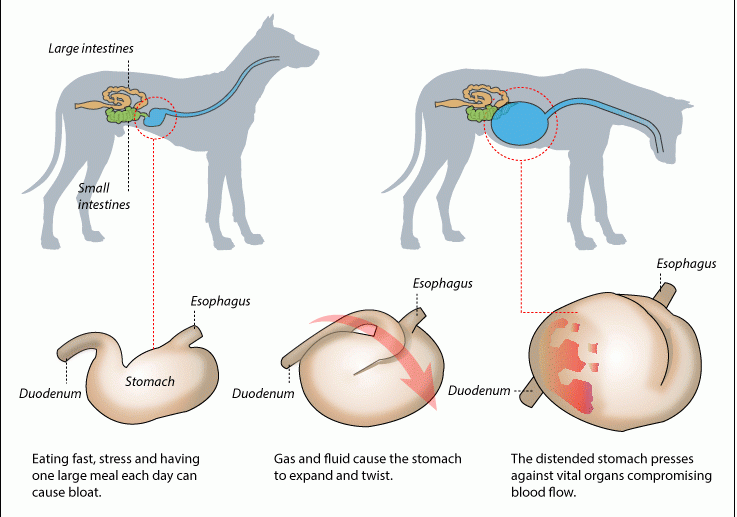
Bloat, also known as Gastric Dilatation-Volvulus (GDV), is a serious and life-threatening condition where a dog’s stomach fills with gas, food, or fluid and then twists on itself. This twisting cuts off blood flow and traps everything inside the stomach. It can lead to shock and death in just a few hours if not treated immediately.
Bloat can come on suddenly, and it’s important to recognize the signs right away. A dog with bloat may have a swollen or tight belly and may try to vomit without bringing anything up (known as dry heaving). Other warning signs include excessive drooling, restlessness or pacing, panting or rapid breathing, and weakness or even collapse. You might also notice pale or bluish gums, which is a sign of poor circulation. Some dogs will stand with their legs spread apart, looking visibly uncomfortable or in pain. If you see any of these signs, it is a medical emergency. You must get your dog to a veterinarian immediately.
If you think your dog might be experiencing bloat, act immediately. Call your veterinarian or the nearest emergency animal hospital right away. Do not try to treat it at home. Every minute counts, and without prompt medical care, dogs can die within just a few hours. While transporting your dog, keep them as calm and still as possible to avoid making the situation worse.
Treatment of bloat may include relieving the pressure on the stomach by using a tube to allow the trapped gas to escape, IV fluids may also be given to maintain blood pressure and support your dog’s heart. If twisting (GDV) is present, emergency surgery is required to untwist the stomach. Early action can save your dog’s life: even with treatment, GDV carries a 30–45% mortality rate, so prompt recognition and intervention are vital. Dogs with GDV who do not receive treatment will not survive.
While bloat is not always preventable, you can lower the risk of bloat by feeding smaller, more frequent meals and using a slow feeder bowl. You can also talk to your vet about a preventative surgery called a gastropexy, where the stomach is tacked to the abdominal wall.